Personalized Korean Medicine & Weight Management in Gangnam, Seoul · International Patient Concierge


Medical Guide
Why Choose Korean Pain Therapy for Your Persistent Headaches?
Find out how Korean pain therapy can relieve persistent headaches naturally. Explore its benefits, techniques, and why it may be right for you—learn more!
Schedule a Consultation
Imagine waking up in the morning, already sensing that dull, throbbing ache creeping across your temples. You haven’t even had your first sip of coffee, but the headache has claimed its place for the day. For many people, headaches are not just an occasional inconvenience — they’re a persistent shadow that affects focus, mood, and even relationships.
According to global health surveys, headaches and migraines are among the most common neurological complaints worldwide. In Korea’s fast-paced urban environments like Gangnam, where long work hours, heavy screen use, and high stress levels are the norm, it’s no surprise that many individuals struggle with frequent headaches. And while over-the-counter painkillers may bring temporary relief, the real question patients often ask us at Arine Korean Medicine Clinic is: “Why do these headaches keep coming back?”
This is where Korean pain therapy offers a refreshing alternative. Rather than chasing away the symptom for a few hours, Korean medicine looks deeper — asking why the headache is happening, and how the body can be guided back into balance.
Understanding Headaches Beyond the Pain
In Western medicine, headaches are typically classified into categories such as tension headaches, migraines, cluster headaches, or sinus-related headaches. This classification is useful for diagnosis, but it doesn’t always explain why your headaches persist despite medication.
Korean medicine approaches headaches through a different lens. It does not see pain as an isolated event but as a sign of systemic imbalance. The body is understood as an interconnected whole, with headaches often being the visible “tip of the iceberg” of deeper disharmonies.
For example:
A patient with migraines may actually be experiencing an underlying imbalance in the liver meridian, which governs stress regulation and blood circulation.
Another patient with the same type of migraine might be suffering from digestive disharmony, where poor gut function creates “dampness” that rises and clouds the head.
Someone with chronic tension headaches may be carrying musculoskeletal strain, often linked to posture, that restricts blood flow and energy through the neck and shoulders.
Treating all of these patients in the same way — with the same pill — overlooks the unique patterns at play.
At Arine, we often tell our patients: “A headache is rarely just in the head. It’s the body’s way of signaling imbalance.” This philosophy changes the way we diagnose and, most importantly, how we treat.
The Korean Medicine Approach to Pain Relief
So, what does Korean pain therapy actually involve for persistent headaches? The answer lies in a combination of time-tested techniques tailored to each patient’s constitution and lifestyle.
1. Herbal Medicine: Treating the Root Cause
Herbal medicine in Korean therapy is not a one-size-fits-all prescription. Each formula is customized to address the root imbalance behind the pain.
For stress-related headaches, herbs that calm the liver, regulate energy flow, and reduce internal heat may be prescribed.
For headaches linked to digestive weakness, formulas that strengthen the stomach and spleen, while clearing dampness, are often used.
For vascular migraines, herbs that improve blood circulation and prevent stagnation can reduce both frequency and severity.
Unlike painkillers, which silence symptoms, herbal medicine works by gradually shifting the body back into balance. Patients often notice not only fewer headaches, but also improvements in digestion, sleep, and energy.
2. Acupuncture and Needle Therapy: Restoring Circulation and Balance
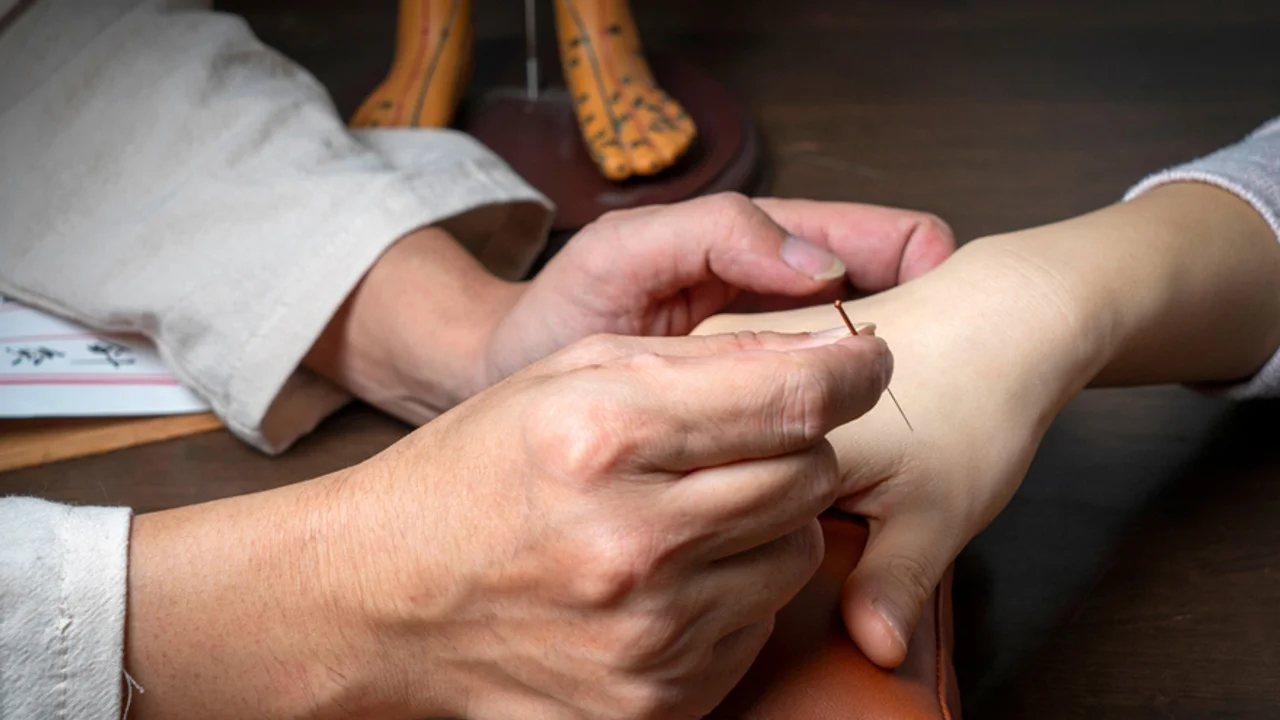
Acupuncture is one of the most recognized components of Korean pain therapy. With precise needle placement, practitioners stimulate specific points that improve circulation, relax tense muscles, and rebalance the nervous system.
Interestingly, many acupuncture points used for headaches are located far from the head. Points on the feet, hands, and even lower legs are frequently chosen because headaches are often reflections of systemic blockages. For example, stimulating points on the liver meridian in the foot can calm stress-related migraines, while points on the hand may release neck and shoulder tension that triggers pain.
At Arine, we also use microneedle therapy, a refined form of acupuncture tailored for pain relief. Patients are often surprised by how gentle — and effective — these treatments feel.
3. Manual and Body-Based Therapies: Addressing Structural Imbalances
Lifestyle plays a significant role in headaches. Many of our patients work at desks for 8–10 hours a day, staring at computer screens with shoulders hunched. This posture compresses muscles and restricts circulation, creating tension headaches that no amount of medication can truly resolve.
Korean manual therapies, such as Chuna manipulation, work to correct these imbalances. By gently realigning joints, relaxing muscles, and improving posture, Chuna therapy directly relieves one of the most common headache triggers in today’s modern world. Patients often describe the sensation afterward as their head feeling lighter and clearer.
Why Choose Korean Pain Therapy Over Conventional Methods?
One of the most common frustrations patients share is the cycle of dependency. Painkillers provide a few hours of relief, but the headaches return — sometimes stronger, sometimes more frequent. This cycle doesn’t just affect health; it erodes confidence in one’s body.
Korean medicine interrupts this cycle by focusing on long-term healing and self-regulation.
Holistic Relief: Instead of silencing pain signals, treatment addresses root causes like stress, fatigue, digestive strain, or musculoskeletal imbalance.
Personalized Care: No two patients receive the same formula or acupuncture plan. At Arine, we evaluate your body constitution, emotional stress, diet, and posture before crafting a plan.
Long-Term Health: By strengthening the body’s resilience, headaches often decrease in both frequency and intensity, and in many cases, disappear entirely.
Minimal Side Effects: Unlike long-term medication use, Korean therapies rely on natural and body-friendly techniques, making them safer for ongoing care.
To be honest, what people often overlook is that persistent headaches are rarely just about pain. They reflect deeper patterns: irregular sleep, skipped meals, excessive caffeine, dehydration, or even unresolved emotional stress. Korean medicine doesn’t dismiss these factors — it embraces them as part of the solution.
A Real-World Example from the Clinic
One of our patients, a young professional working in Gangnam, came to us after years of struggling with tension headaches. She had tried everything from high-dose medication to regular massages, but the relief never lasted.
Through a tailored program of acupuncture, herbal medicine, and postural correction, her headaches gradually eased. But something remarkable also happened: she noticed she was sleeping more deeply, waking with more energy, and feeling less anxious at work.
Her story isn’t unique. We see similar transformations every week. What these cases demonstrate is that treating headaches holistically has ripple effects across every part of life. When the head clears, the whole body follows.
Is Korean Pain Therapy Right for You?

If you’ve been enduring frequent headaches and feel trapped in the cycle of temporary fixes, Korean medicine offers a different path. It’s not about a quick escape, but about reshaping the conditions that give rise to pain.
Ask yourself:
Do your headaches return within hours of taking painkillers?
Do you notice headaches worsening during stressful weeks or poor sleep?
Do you also experience digestion issues, neck stiffness, or fatigue alongside your headaches?
If yes, your pain is likely linked to deeper imbalances that Korean therapy can help uncover and resolve.
At Arine Korean Medicine Clinic, we specialize in pain management that blends traditional wisdom with modern insights. Under the guidance of Dr. Seungseok Chae, we help patients not only find relief from headaches but also learn how to maintain balance in their daily lives. Whether through herbal formulas, acupuncture, or manual therapy, our goal is to give you more than temporary relief — we aim to restore harmony and prevent recurrence.
Taking the Next Step
Persistent headaches don’t have to define your days. If you’re tired of masking the pain and want to explore a more holistic solution, consider visiting us in Gangnam. Our approach is patient-centered, natural, and designed for long-term wellness.
If headaches have been interfering with your productivity, sleep, or happiness, it may be time to schedule a consultation at Arine Korean Medicine Clinic. Together, we’ll look beyond the pain to uncover what your body truly needs.
More Articles
Continue reading clinical guides from Arine Korean Medicine Clinic.

Postpartum Swelling? How Korean Medicine Can Help You Heal Faster
Discover how Korean medicine reduces postpartum swelling and speeds up recovery naturally. Learn proven remedies for faster healing after childbirth.
Learn More

How Keep Sticks Help You Stick to Your Weight Loss Goals
Discover how Korean medicine reduces postpartum swelling, speeds healing, and restores balance naturally. Learn more about holistic recovery today!
Learn More
Is Acupuncture the Key to Finally Beating Persistent Pain?
Discover how acupuncture may help relieve chronic pain naturally. Explore its benefits, effectiveness, and if it's right for you. Learn more today!
Learn More