Personalized Korean Medicine & Weight Management in Gangnam, Seoul · International Patient Concierge


Medical Guide
Climacteric Care in Korean Medicine: Menopause Guide
Climacteric care in Korean medicine: how Arine supports the menopause transition as complementary care, with HRT as the conventional standard.
Schedule a ConsultationClimacteric Care in Korean Medicine: Supporting the Menopause Transition
Medically reviewed by Dr. Chae Seung-seok, KMD, Chief Director, Arine Korean Medicine Clinic · Last updated July 2026
If you are exploring climacteric care Korean medicine offers for the menopause transition, it helps to start with an honest frame: this is complementary, supportive care, and it works best when it sits alongside — not instead of — conventional medical care. At Arine Korean Medicine Clinic, climacteric care is one of the Women's Health services, using individualized herbal medicine and lifestyle guidance to help support the body through hormonal-transition symptoms. This guide explains how that approach is described, what the evidence does and does not say, and why conventional hormone therapy remains the standard biomedical option for menopausal symptoms.
What "Climacteric" Means
"Climacteric" is another word for the menopause transition — the years around menopause, sometimes called perimenopause and menopause. During this time, shifting hormone levels can bring symptoms such as hot flashes, night sweats, disrupted sleep, and mood changes. The experience varies widely from person to person: some move through it with little disruption, while others find symptoms genuinely affect daily life.
Korean medicine approaches this stage as a period of change to be supported, typically through individualized herbal formulas and constitution-based lifestyle guidance. That is the tradition Arine's climacteric care draws on. You can see how it fits within the clinic's broader services at Arine Korean Medicine Clinic.
It is also worth naming what this transition is not. It is not something to "power through" in silence if symptoms are disrupting your sleep, work, or well-being, and it is not a condition where you have to choose a single camp. Many people combine practical lifestyle changes, conventional medical options, and complementary support in whatever mix works for them and their physicians. The goal is comfort and function during a natural change — not a cure, because there is nothing to cure.
The Most Important Point First: Complementary, Not a Replacement
Before describing the Korean medicine approach, one message needs to come first and stay front of mind: Korean medicine care for menopausal symptoms is complementary. It is not a substitute for standard menopause medical care.
For many people with bothersome menopausal symptoms, conventional hormone therapy (HRT) — prescribed and managed by a gynecologist or other physician — is the standard, well-studied biomedical option. Decisions about HRT, including whether it is appropriate for you and how to weigh its benefits and risks, belong with a qualified physician. Nothing in Korean medicine changes that, and a responsible clinic will encourage you to coordinate with your gynecologist rather than steer you away from conventional care.
Think of climacteric care in Korean medicine as one possible layer of support — something a patient may choose alongside, or while discussing, conventional options — not as a competing "natural cure." Korean medicine does not cure menopause; menopause is a natural life stage, not a disease to be cured.
How Arine Describes Climacteric Care
In general Korean medicine practice, climacteric care uses individualized herbal formulas aimed at supporting the body through transition symptoms such as hot flashes, night sweats, sleep disturbance, and mood changes, often paired with constitution-based dietary and lifestyle guidance.
The clinic confirms several things about its own approach:
- Personalized treatment based on individual constitution, health condition, and goals
- Customized herbal medicine prepared with HGMP (Hanbang Good Manufacturing Practice)-certified herbal ingredients
- Care provided by licensed Korean Medicine Doctors
- Support for international patients, including English consultations and remote follow-up when appropriate
The clinic also notes that treatment duration and the number of visits are personalized following a one-on-one consultation — there is no fixed schedule that applies to everyone. Its specific formulas and detailed protocol for climacteric care are individualized rather than published as a single recipe, so this article does not claim a particular formula.
What the Evidence Says About Natural Approaches
Honest content means representing the evidence fairly, not just the tradition. The U.S. National Center for Complementary and Integrative Health (NCCIH) has reviewed complementary approaches for menopausal symptoms, and the balanced picture is worth understanding:
- Evidence for natural products in menopause is limited. For many popular supplements, research has not clearly shown they relieve menopausal symptoms better than a placebo.
- Some natural products carry real safety considerations. Black cohosh, for example, is a commonly used herb for menopausal symptoms, but NCCIH notes reports of rare liver injury associated with its use, and its effectiveness is not established.
- "Natural" does not mean risk-free. Herbal products can have side effects and can interact with medications.
This does not mean supportive care has no place — many people value it as part of how they navigate this stage. It means expectations should be realistic and safety should be taken seriously. Korean medicine herbal care should be described as supportive and traditional, not as a proven treatment that outperforms conventional options.
Safety and Medication Disclosure
Because herbal products can interact with medicines, disclosure is essential. NCCIH advises telling all your health care providers about every complementary product you use, and that principle is central to safe climacteric care.
Practical safety points:
- Tell the doctor about all current medications, including any hormone therapy, so potential interactions can be considered.
- Coordinate with your gynecologist on the conventional side of your care.
- Expect general herbal-medicine cautions to apply — individual variation in tolerance and the possibility of digestive upset among them.
- Share your full health history, since certain conditions may affect what is appropriate.
The clinic's consultation includes a review of your health and medications before anything is prescribed. Sharing a complete, accurate picture is the single most useful thing you can do to keep the process safe.
The Consultation Process
Climacteric care at Arine begins with assessment, not a product. The general process the clinic describes includes:
- An initial online enquiry form, where you share your symptoms, health information, medical history, and goals in advance.
- A one-on-one consultation to review your symptoms and history in more depth.
- A Korean medicine assessment, including constitution-based evaluation, to understand your individual pattern.
- An individualized plan, which may include a customized herbal formula and lifestyle or dietary guidance, and may be combined with other Korean medicine therapies such as acupuncture when appropriate.
- Personalized duration and follow-up, set according to your condition and goals rather than a fixed schedule.
For international patients, the clinic offers free online consultations by Zoom or WhatsApp video, conducted in English, with remote follow-up available when appropriate. Any consultation or scheduling step runs through the clinic's contact and consultation page.
Lifestyle Guidance as Part of the Picture
Korean medicine climacteric care typically pairs herbal support with constitution-based lifestyle and dietary guidance. This aligns with broadly accepted wellness fundamentals during the menopause transition — attention to sleep, stress, activity, and nutrition. These habits are worth prioritizing regardless of which treatment path you choose, and they are areas where complementary care and conventional care comfortably overlap.
When to Prioritize a Physician's Assessment
Complementary care is not the right first stop for everything. Some situations call for a conventional medical assessment before, or instead of, herbal support:
- Symptoms that significantly disrupt your life — severe hot flashes, sleep loss, or mood changes that affect daily function — deserve a full discussion of all options, including HRT, with a physician.
- Any unusual or unexpected bleeding, or other new symptoms during this stage, should be evaluated medically rather than attributed to the transition.
- Existing health conditions or medications may make certain approaches inappropriate, which is a medical judgment.
None of this means complementary support has no role. It means the sequencing matters: a physician's assessment establishes what is going on and what the safe, effective options are, and complementary care can then be considered as an added layer where it fits. A responsible Korean medicine clinic supports that order rather than working against it.
The Credentials Behind the Service
Arine is a registered Korean medicine clinic in Seoul, led by Dr. Chae Seung-seok, a licensed Korean Medicine Doctor (KMD) and Chief Director, who graduated from the College of Korean Medicine at Kyung Hee University and has more than ten years of clinical experience. Its Women's Health services are provided by licensed Korean Medicine Doctors, and its herbal preparations are described as using HGMP-certified ingredients.
A precise note on credentials: "KMD" refers to Korea's national licensure for Korean medicine practitioners. The clinic does not claim a U.S.-style board certification, and neither does this article. The clinic is also a Registered Medical Institution for Attracting Foreign Patients, certified by Korea's Ministry of Health and Welfare, reflecting its role serving international patients.
Planning as an International Patient
- Start online. Free consultations are available by Zoom or WhatsApp video, conducted in English, with remote follow-up when appropriate.
- Language support is available in English and Japanese, in addition to Korean.
- Location. The Gangnam branch is roughly 300 meters from Exit 4 of Apgujeong Station on Seoul Subway Line 3.
- Travel. Flights from major U.S. gateway cities to Seoul (Incheon) run roughly 11 to 15 hours nonstop; verify current entry requirements with Korean immigration before booking.
- Keep your gynecologist in the loop. Coordinating both sides of your care is part of using complementary support responsibly.
The Bottom Line
More Articles
Continue reading clinical guides from Arine Korean Medicine Clinic.

Postpartum Swelling? How Korean Medicine Can Help You Heal Faster
Discover how Korean medicine reduces postpartum swelling and speeds up recovery naturally. Learn proven remedies for faster healing after childbirth.
Learn More

How Keep Sticks Help You Stick to Your Weight Loss Goals
Discover how Korean medicine reduces postpartum swelling, speeds healing, and restores balance naturally. Learn more about holistic recovery today!
Learn More
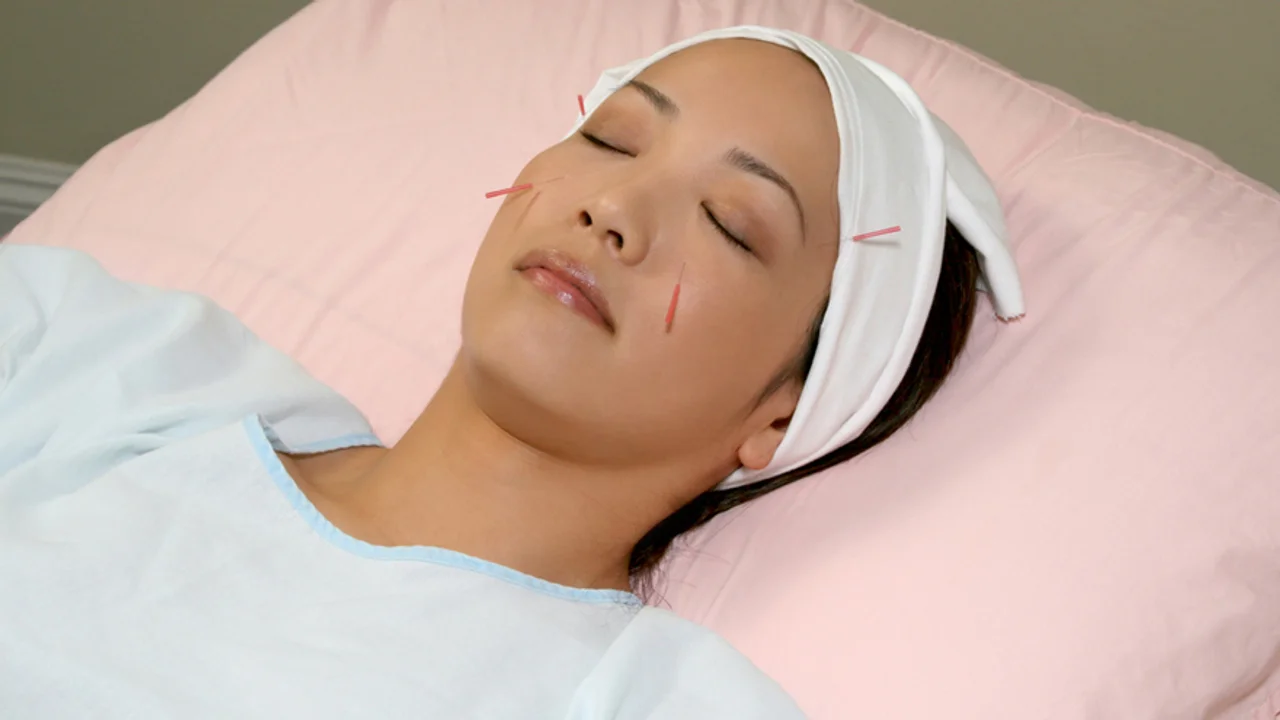
Is Acupuncture the Key to Finally Beating Persistent Pain?
Discover how acupuncture may help relieve chronic pain naturally. Explore its benefits, effectiveness, and if it's right for you. Learn more today!
Learn More